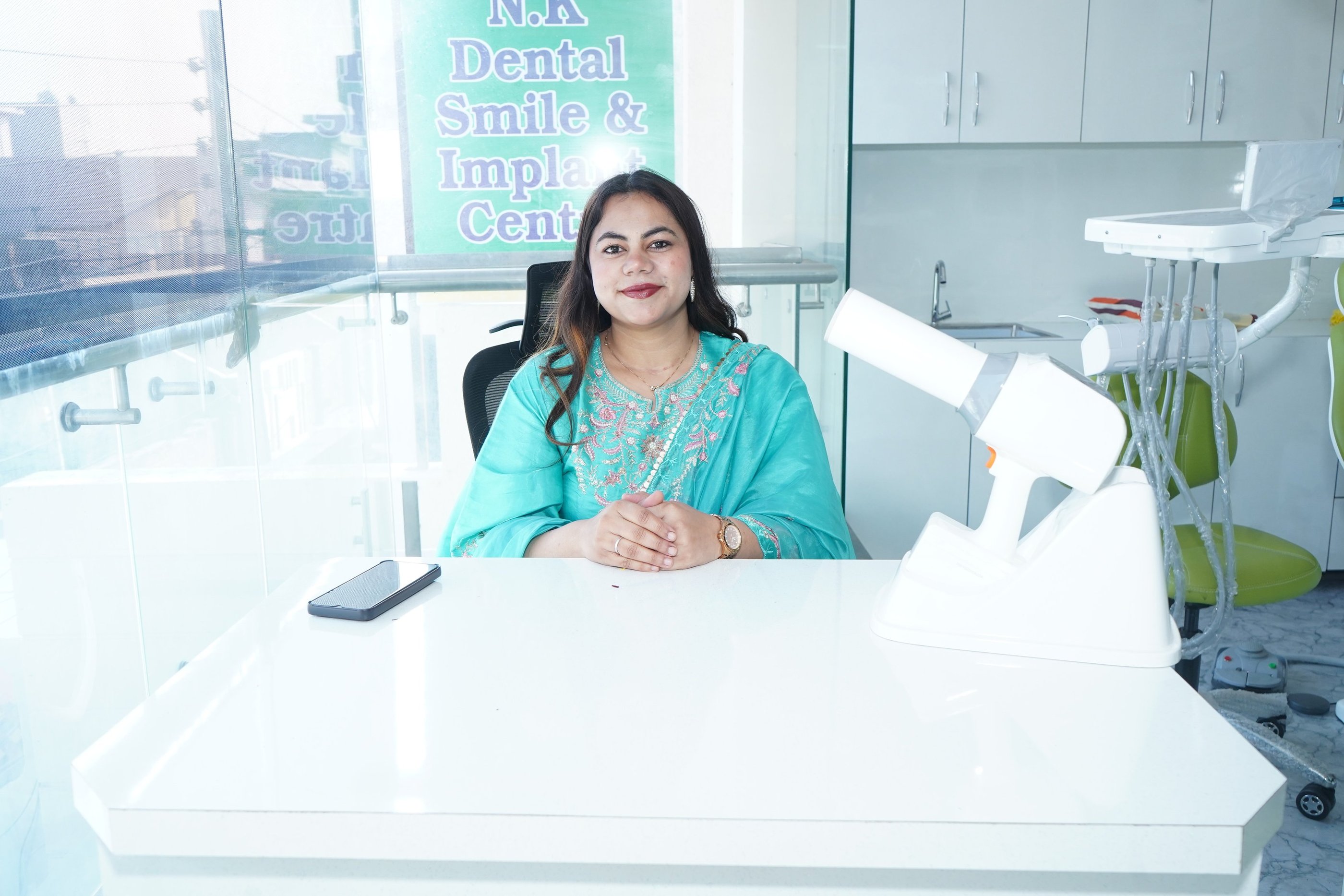
Most clinics on Kapurthala Road run several chairs and several hands. This one runs one. Dr. Narinder Kaur diagnoses your case, plans it, performs it and reviews it — so nothing gets handed over halfway and nothing gets explained twice, differently.
It doesn't feel like a hospital, and that's deliberate.
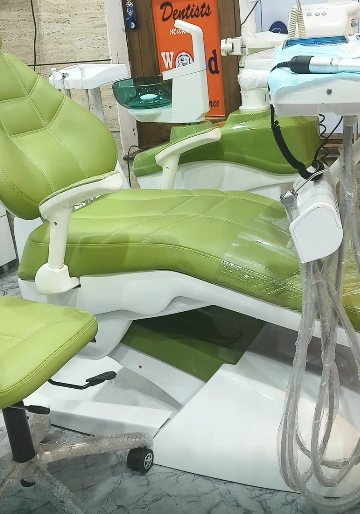
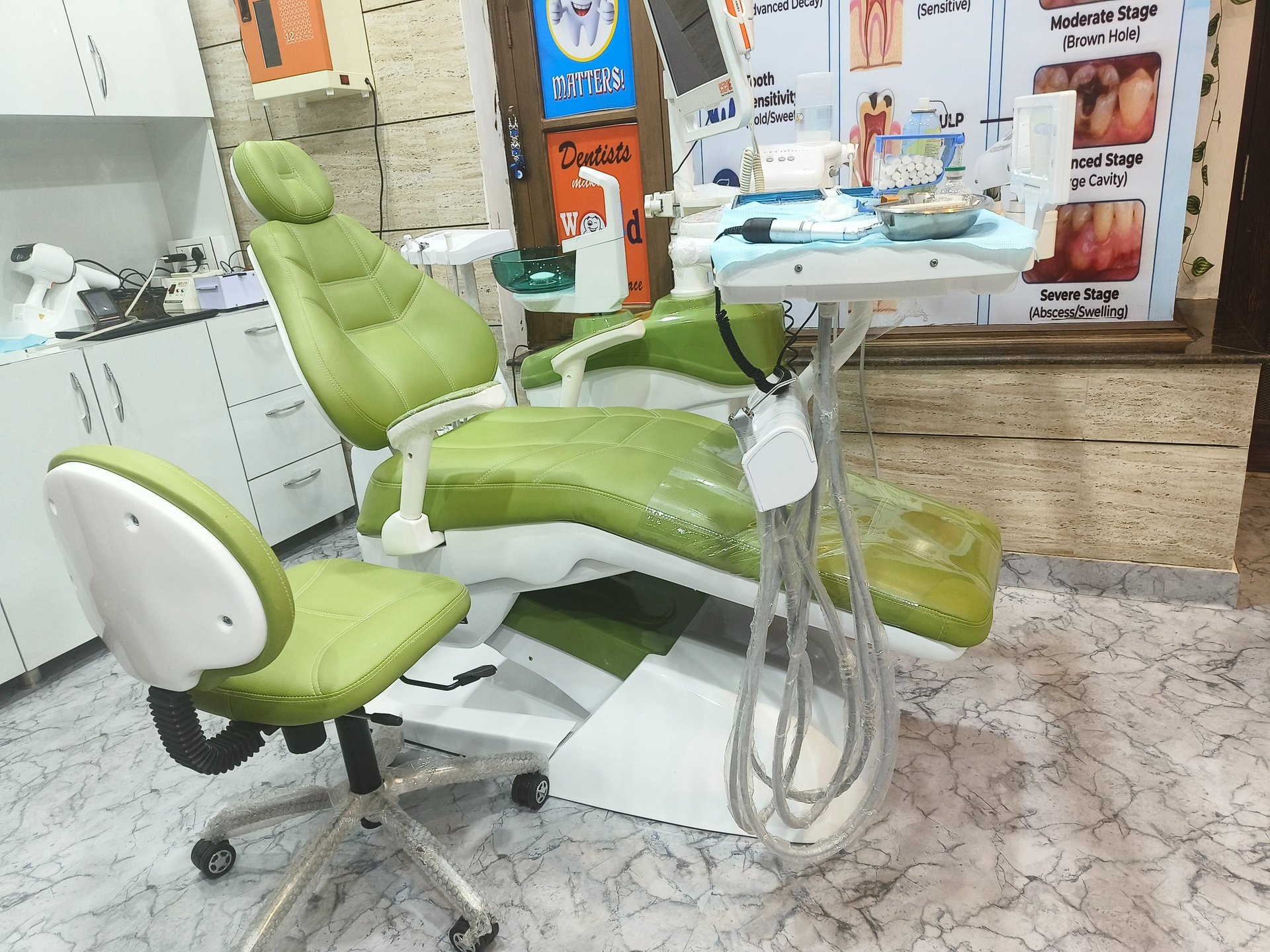
Polished marble, daylight, and a soft green chair rather than the usual clinical white — the same green that runs through the studio's identity. It reads as calm rather than sterile, which matters more than most clinics admit: a patient whose shoulders are up around their ears is harder to treat and slower to heal.
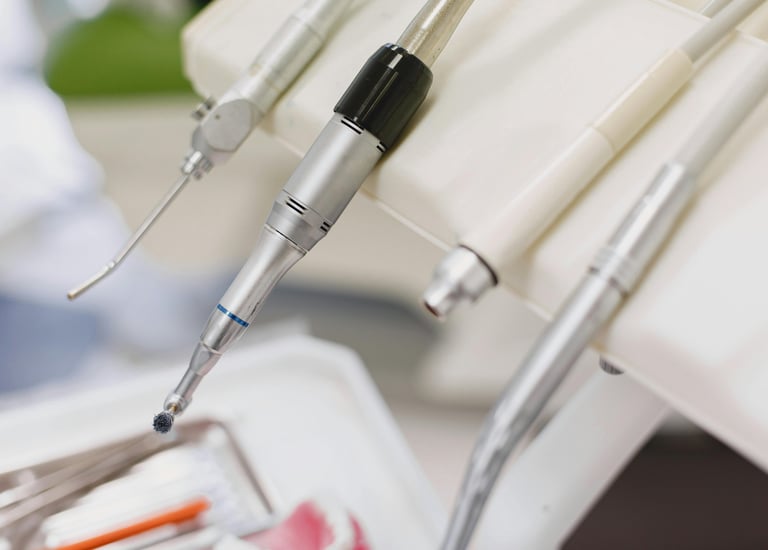
The delivery unit, suction and light are arranged so instruments come from behind you rather than across your face. Everything within arm's reach of the chair is either wiped down or barrier-wrapped between patients, and the tray is opened in front of you rather than before you walk in.
One chair, one appointment at a time — no overlapping slots
Ground floor, easy access for elderly patients
Punjabi, Hindi or English, whichever comes naturally
Sterilisation
The part you can't see is the part that matters.
Every patient wonders about it and almost nobody asks. So here is the whole cycle, written down. If you'd rather see it than read it, ask on the day — the sterilisation area is a few steps from the chair and you're welcome to watch.
1
Straight into solution
The moment an instrument leaves your mouth it goes into a disinfectant bath. Nothing sits out on a tray waiting to be dealt with later.
2
Ultrasonic clean
An ultrasonic bath shakes debris out of hinges, threads and the flutes of files — the places a brush cannot reach and where a quick scrub leaves the most behind.
3
Scrubbed and dried
Hand-checked under light, because an autoclave sterilises what is clean; it does not clean what is dirty.
4
Pouched and sealed
Instruments are sealed into pouches carrying an indicator strip that changes colour only once the full cycle has run.
5
Steam autoclave
Pressurised steam, full cycle, every load. Handpieces go through the same process as everything else rather than being wiped between patients.
6
Opened in front of you
The pouch stays sealed until you are in the chair. You see the indicator strip and you see it torn open. Needles, blades, gloves and suction tips are single-use and go straight to sharps disposal.
If a pouch is open, or you didn't watch it being opened, say so and it gets replaced. No explanation needed, no awkwardness. That is the standard here and it costs us nothing to hold.
Equipment
Tools that shorten the appointment, not lengthen the bill.
Technology here is bought for one reason: it either makes the diagnosis more certain or the treatment less unpleasant. If it does neither, it isn't in the room.
Digital RVG imaging
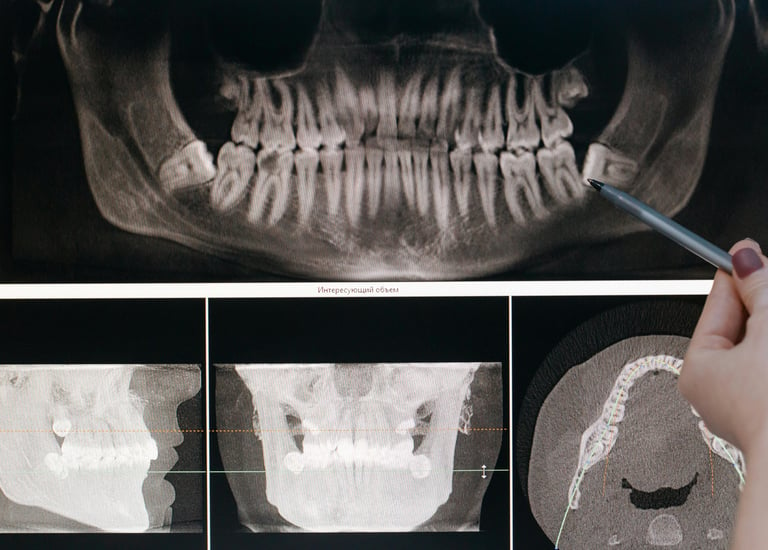
The image is on screen in seconds at a fraction of the radiation of old film, and it's turned toward you. You see the infection, the bone level or the crack at the same moment she does — which makes the treatment plan an agreement rather than an announcement.
Rotary endodontics
Motor-driven files shape a root canal faster and more evenly than hand files, which is the difference between a root canal spread over three visits and one finished in one or two.
Ultrasonic scaling
High-frequency vibration lifts hardened tartar off the gum line with far less scraping. Most people who dread a cleaning are remembering hand instruments.
Light-cured composite
Fillings set on command under a curing light, shade-matched to the tooth beside them. You leave able to eat, and nobody sees a silver patch when you laugh.
Implant placement unit
Torque-controlled drilling with irrigation, so the bone is never overheated during placement. Overheated bone is the quiet reason implants fail to integrate.
Shade matching
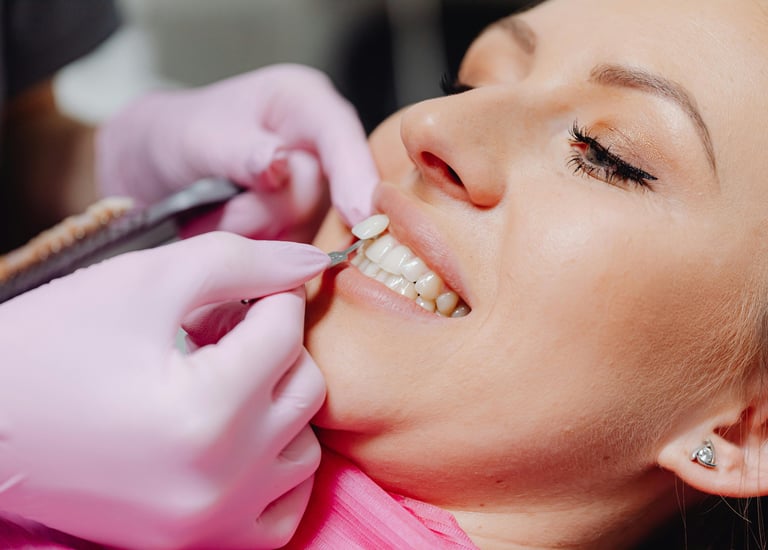
Crowns, veneers and whitening results are checked against a physical shade guide under consistent light — recorded at the start and again at the finish, so "whiter" is a measurement rather than an opinion.
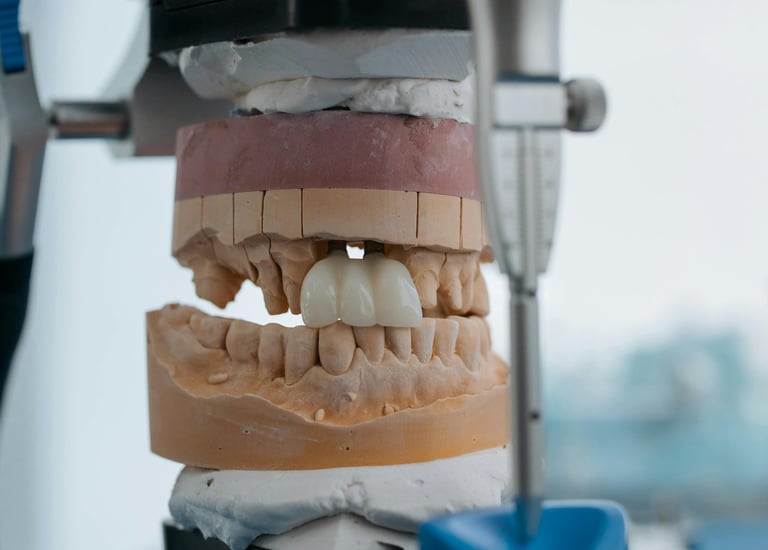
Ceramic & zirconia work
Crowns built to your bite, not to an average one.
Patients keep mentioning the zirconia work in their reviews, and there's a reason. A crown that's a fraction too tall throws the whole bite out; one that's a fraction too pale sits in a smile like a lit window. Both are avoidable, and both come down to how carefully the impression, shade and bite registration are taken before anything is fabricated.
Shade and bite recorded at the chair, not guessed from a photo
Zirconia and layered ceramic options explained with the cost of each
Trial fit before the crown is cemented for good
Adjusted at review if the bite feels high a week later
Around the studio
A look around before you arrive.
The treatment roomDr. Narinder Kaur, BDSJasmeen, after her smile makeoverInstruments, pouched and readyDigital RVG imagingShade matching
7+Years chairside
5.0Google rating
39 / 39Reviews are five star
1Dentist, start to finish
Come and see it
Ask for the tour. She'll give you one.
Mon to Sat, 10am–2pm and 4pm–8pm. First treatment is 10% off, and a look around costs nothing at all.